Why made-to-measure furniture is worth it, and how to get it right
Furniture made for your room fits exactly, uses awkward spaces, lasts longer and avoids shipping delays. How bespoke furniture works in Nigeria, from timber and fabric to drawings and finishing.
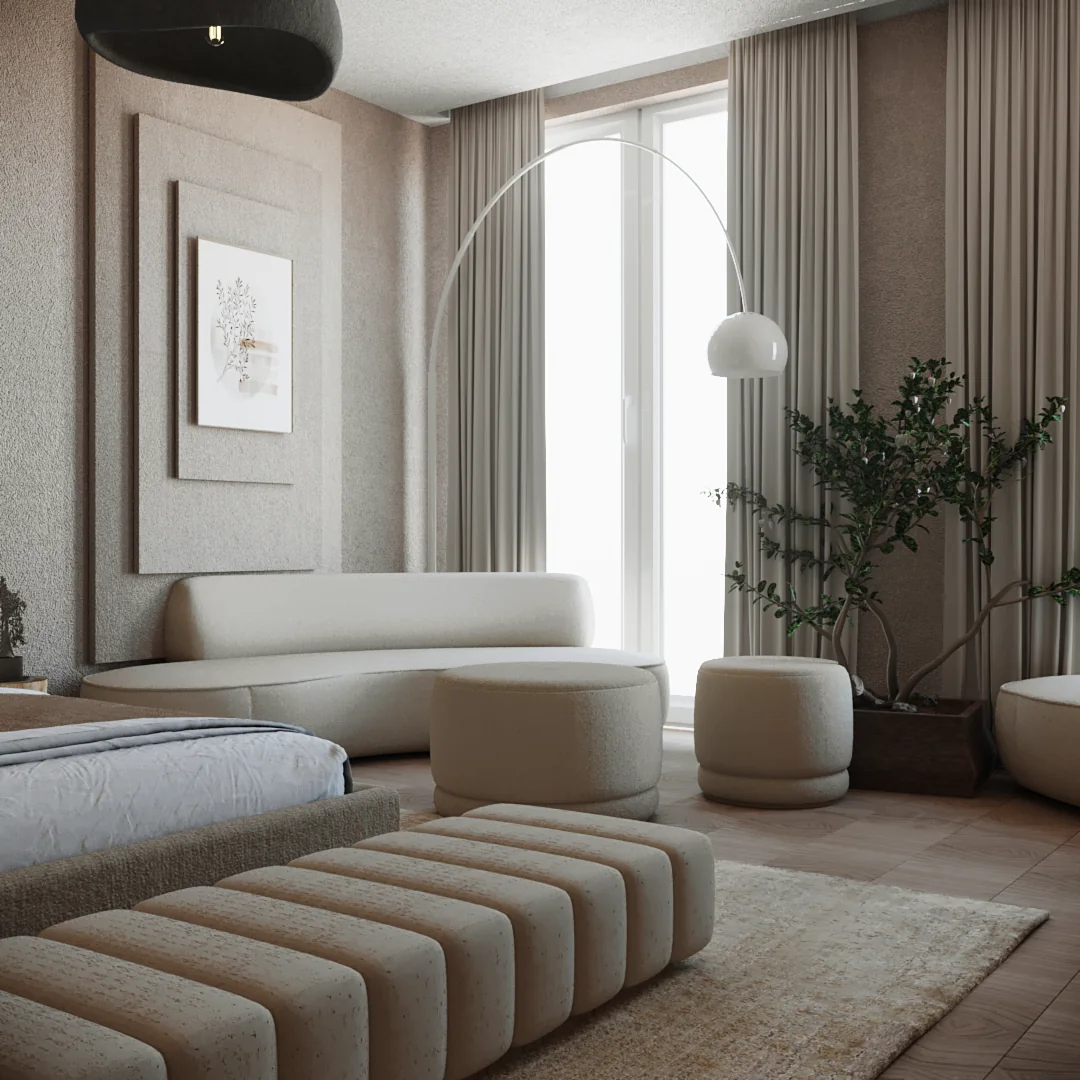
Walk into many homes and you’ll see furniture that almost fits: a sofa slightly too big for the wall, a bed that leaves an awkward gap, a dining table that blocks the walkway, shelves that stop short of the alcove. Standard furniture comes in standard sizes, and real rooms rarely are standard.
Made-to-measure furniture, designed and built for a specific space, solves this. It fits exactly, makes use of awkward corners, can be designed around how you live, and, when it’s well made, lasts for many years. This guide explains when bespoke furniture is worth it, how it works in Nigeria, and how to get it right.
When made-to-measure makes the most sense
Not every piece needs to be bespoke. It’s most valuable when:
- The space is awkward: alcoves, sloping ceilings, corners, under stairs, around windows or columns.
- Every centimetre matters: in small apartments or busy family homes.
- You need specific storage: wardrobes, media walls, dressing tables, bookcases.
- Standard sizes don’t suit you: a very long dining table for large family gatherings, a deep sofa, a bed for a very tall person.
- You want something unique: a piece that reflects your home and taste rather than a catalogue.
- Imports are slow or expensive: locally made furniture avoids shipping delays, customs and exchange-rate risk.
Built-in versus freestanding bespoke
Made-to-measure furniture comes in two kinds. Built-in pieces, like wardrobes, media walls, window seats and kitchens, are fixed to the building and become part of the architecture. Freestanding pieces, like sofas, beds, dining tables, benches and consoles, are designed for a specific room but can move with you.
Both benefit from being designed alongside the interior. When we design a home, we often design key pieces of furniture at the same time, so they fit the space, the palette and the way the room is used. You can read about built-in storage in built-in wardrobes and storage.
Nigeria’s craftsmanship
Nigeria has a long tradition of skilled carpentry, upholstery, metalwork and weaving. Many excellent pieces are made by local workshops. The difference between good and disappointing bespoke furniture usually comes down to three things: the design, the materials and the workmanship. Get all three right and locally made furniture can match or exceed imported pieces.
Timber: the most important choice
For wooden furniture, the timber matters enormously.
Choose the right species
Nigeria has beautiful native hardwoods. Iroko is prized for its durability and resistance to rot and insects, and has long been used for furniture, doors and joinery. Mahogany and other hardwoods are also widely used. Imported timbers like oak and walnut, or veneers of them, offer different looks. Your furniture maker should advise on which timbers suit each piece.
Make sure it’s properly dried
Timber that hasn’t been properly seasoned or kiln-dried will move as it dries out in your home: it can warp, twist, split and open up at the joints. In our humid climate, this is one of the most common problems with locally made furniture. Ask how the timber was dried, and if possible, check its moisture content before it’s worked.
Treat against insects
Termites and wood-boring insects are a real risk. Timber should be treated, and some species are naturally more resistant than others. Ask what treatment will be used.
Solid wood or engineered boards?
Solid wood is beautiful and repairable. Engineered boards with real wood veneer are more stable, less likely to warp and often better for large flat panels like wardrobe doors and table tops. Quality pieces often combine both: solid timber for frames and edges, veneered boards for panels. In kitchens and bathrooms, moisture-resistant boards are essential.
Upholstery: comfort that lasts
For sofas, chairs, beds and benches, what’s inside matters as much as the fabric outside:
- Frame: a solid, properly jointed hardwood frame, not soft timber or particleboard.
- Springs and webbing: good support that won’t sag.
- Foam: high-density foam that keeps its shape, often wrapped in fibre for softness.
- Fabric: suited to the use and the climate. Performance fabrics resist stains and fading; natural linens breathe but crease; boucle is tactile but can snag. See designing for Lagos heat, humidity and dust.
- Removable covers: a practical choice in homes with children and during harmattan.
Finishes
The finish protects furniture and defines its look. Oils give a natural, matt look and are easy to touch up but need occasional reapplying. Lacquers and hard-wax finishes are tougher and more water-resistant. Ask for samples of the finish on the actual timber, and think about how the piece will be used: a dining table needs to resist heat, water rings and spills.
Metal and stone
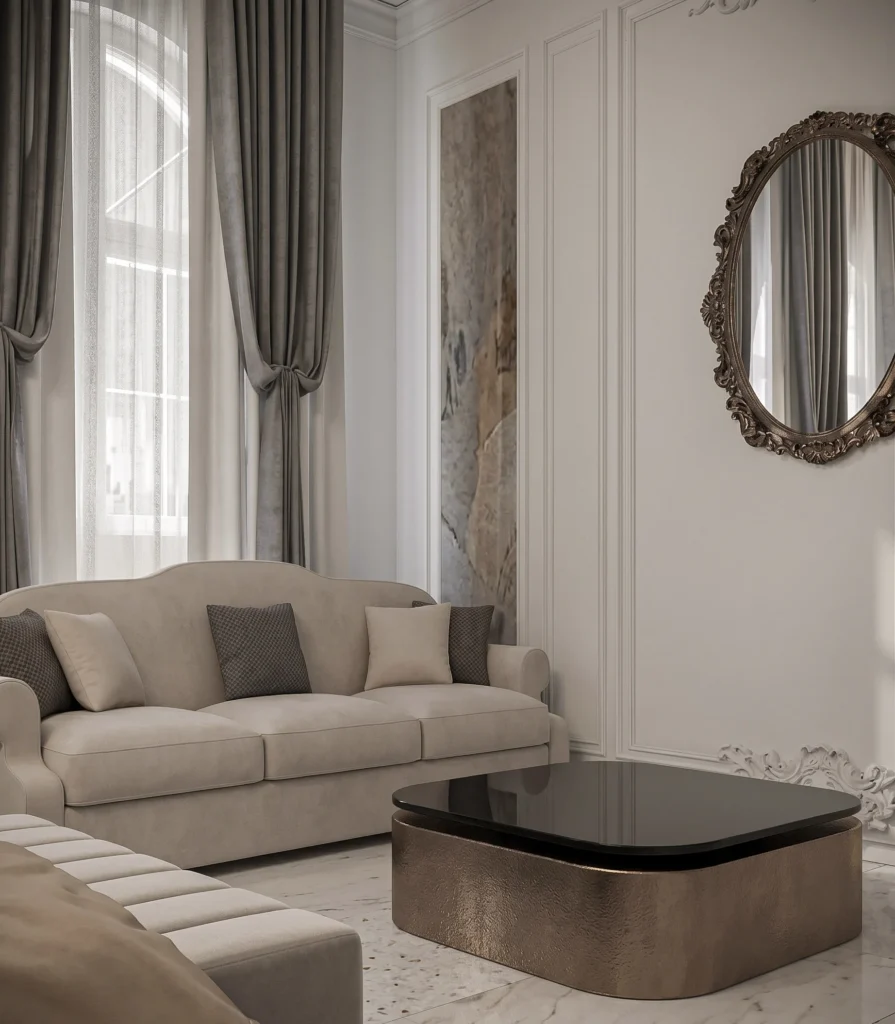
Many beautiful pieces combine timber with metal or stone: a stone-topped side table, a bronze-edged coffee table, steel legs on a dining table. Metal needs a durable finish to resist corrosion, especially near the coast. Stone tops need sealing and support strong enough for their weight. The hammered metal coffee table in our Classical Bedroom project shows how metal can bring warmth to a quiet room.
Getting the design right
Start with drawings
Good bespoke furniture starts with clear drawings: exact dimensions, materials, joints, finishes, hardware and any details like grooves, handles or legs. Drawings remove guesswork and give the maker everything they need to quote accurately and build properly.
See it in the room
Before anything is built, it’s worth seeing the piece in the room at the right scale. In 3D, you can check proportions, how it relates to the walls and windows, how much space it leaves around it, and how it looks with the other furniture. See why we show you your home in 3D.
Think about ergonomics
Comfortable furniture depends on dimensions: seat height and depth, back angle, table height, knee clearance, shelf heights and drawer depths. A beautiful chair that’s uncomfortable will sit unused.
Check samples
Ask for samples of the timber, finish, fabric and any metal or stone before the piece is made. Colours and textures vary, and samples avoid surprises.
Working with a maker
- Look at finished pieces in person if you can, not just photos.
- Ask about the timber, how it was dried and how it’s treated.
- Agree drawings, materials, finishes, price and delivery date in writing.
- Pay in stages: a deposit, then on completion and inspection.
- Visit the workshop during making if possible.
- Inspect the piece carefully before final payment: joints, finish, drawers, doors, stability.
The cost question
Made-to-measure furniture isn’t always more expensive than imported furniture of similar quality, especially once shipping, duties and exchange rates are included. But quality bespoke work does take skilled time and good materials, so it shouldn’t be the cheapest option. Think of it as an investment: a well-made piece can last decades, be repaired, re-upholstered and passed down.
Spend on the pieces you use most and that matter most to how a room works: the main sofa, the bed, the dining table, the wardrobes. Our guide to budgeting for interior design explains where to invest.
Suiiel Furniture
Furniture is a natural extension of what we do. Sometimes a room needs a piece you can’t find in a shop: a bench that fits the wall exactly, a table in just the right stone, a headboard designed for a particular bedroom. So we design it. Suiiel Furniture is our own collection, made with the same attention to proportion and material as our interiors. You can explore it at furniture.suiiel.com.
When we design a home, we can also design made-to-measure pieces specifically for it, drawn, shown in 3D and specified so they fit perfectly.
Delivery and installation
Before a large piece is built, check how it will get into the room. Measure doorways, corridors, stairwells and lifts. Large sofas, wardrobes and tables may need to be designed in sections that join on site. Built-in pieces need a straight, level wall and floor; agree who prepares the space, who fits the piece, and who makes good any marks to walls and floors afterwards.
Looking after bespoke pieces
Ask your maker for care instructions. Oiled timber needs re-oiling occasionally; lacquered finishes need gentle cleaners; stone tops need resealing; upholstery benefits from regular vacuuming and prompt attention to spills. Keep furniture out of direct sun where possible and away from air conditioning vents, which can dry out timber unevenly. A well-cared-for piece will look better with age.
Allow enough time
Good bespoke furniture isn’t instant. Design, drawings, samples, sourcing timber and fabric, making, finishing and delivery all take time. Order key pieces as soon as the design is fixed, so they arrive when the rooms are ready rather than weeks after you move in.
Common bespoke furniture mistakes
- Building from a photo with no drawings.
- Using timber that hasn’t been properly dried.
- Skipping insect treatment.
- Choosing fabric for looks alone, not for use and climate.
- Not checking dimensions against the room and doorways. Can the sofa actually get in?
- Paying the full amount upfront.
The short version
Made-to-measure furniture fits exactly, uses awkward spaces, suits how you live and lasts. Get the design, materials and workmanship right: clear drawings, well-dried and treated timber, quality upholstery, durable finishes and a maker you trust.
Want furniture designed for your home? Tell us about your space, or visit Suiiel Furniture.