Built-in wardrobes and storage: designing for real life
Good storage is what keeps a home calm. How to plan built-in wardrobes, kitchen storage, media walls and hidden cupboards that fit your life, survive humidity and look beautiful.
Ask people what they would change about their home, and “more storage” is almost always near the top of the list. Clutter makes rooms feel smaller, makes cleaning harder and makes it difficult to relax. Good storage is the quiet backbone of every calm, beautiful home, and the best of it is designed in from the start rather than added later.
This guide covers how we plan storage for homes in Nigeria: built-in wardrobes, dressing rooms, kitchen storage, media walls, entrance storage and the hidden cupboards that make daily life easier, with attention to the humidity and dust of our climate.
Start with an honest inventory
Good storage design starts with what you actually own and how you use it. How many clothes hang, and how many fold? How many pairs of shoes? Bags? Traditional outfits and gele that need special care? Suitcases? Bedding for guests? Children’s toys? Bulk food? Cleaning equipment? Documents?
Different items need different storage. Long dresses and agbada need full-height hanging; shirts and jackets need half-height; folded clothes suit shelves or drawers; shoes need shallow, well-ventilated shelves; heavy items belong low; things you rarely use can go high. The more precisely storage fits what you own, the more it holds and the easier it is to keep tidy.
Built-in versus freestanding
Freestanding wardrobes are quick and portable but rarely use space well. They leave gaps at the top, sides and corners, collect dust on top, and often don’t fit awkward walls.
Built-in wardrobes go from floor to ceiling and wall to wall, using every centimetre. They look calmer because they read as part of the architecture rather than furniture, and they can be designed precisely around what you own. They’re more of an investment, but in most homes they’re worth it.
Planning a built-in wardrobe
Depth and doors
Wardrobes for hanging clothes need enough depth for hangers to fit comfortably with the doors closed. Hinged doors need space in front to open; sliding doors save floor space but mean you can only see part of the wardrobe at once. In tight bedrooms, sliding or bi-fold doors are often the better choice.
The inside matters most
Plan the interior carefully: a mix of long and short hanging, adjustable shelves, drawers for small items, pull-out trays for jewellery and accessories, shoe shelves, and high shelves for suitcases and seasonal items. Internal lighting that switches on when the doors open is a small luxury that makes a big difference, especially in the early morning.
Ventilation
In our humid climate, sealed wardrobes can become musty and damp, especially against outside walls. Leave a small gap behind the back panel, add discreet ventilation slots at the top and bottom, and avoid placing wardrobes where water might come through a wall during the rainy season. Moisture absorbers inside help during the wettest months.
Materials
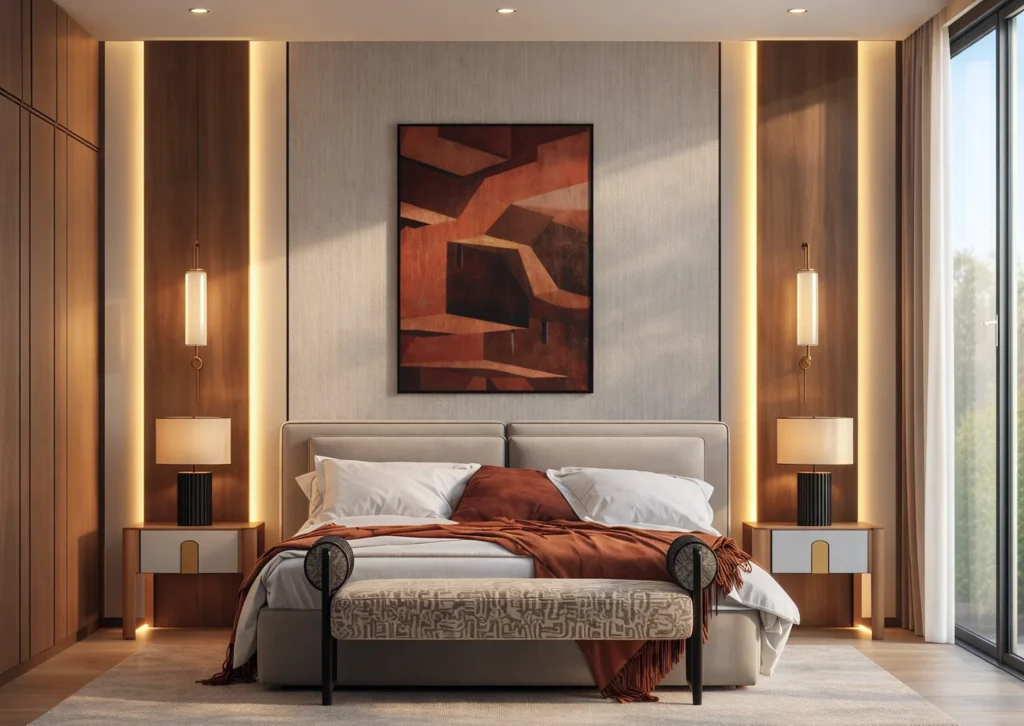
Use moisture-resistant boards, well-sealed edges and good-quality hinges and runners that won’t rust or sag. Doors can be painted, veneered in timber, upholstered, mirrored or fluted. Fluted or ribbed timber, like the wall panels in our Earthy Abode project, adds texture and warmth to wardrobe doors without fuss.
Walk-in wardrobes and dressing rooms
If you have the space, a walk-in wardrobe or dressing room keeps clothes out of the bedroom entirely, making the bedroom calmer. It needs a clear walkway, open or glass-fronted storage so you can see everything, a full-length mirror, good lighting, somewhere to sit, and ideally a window or good ventilation. An island with drawers in the middle is a lovely addition in larger dressing rooms.
Our Modern Home project includes a dressing area with a walnut vanity and stool, framed by round mirrors.
Kitchen storage
Kitchens need more storage than most people expect, especially for families who cook in large quantities and buy in bulk. Deep drawers for pots and pans are far easier to use than cupboards where you kneel to reach the back. Tall pull-out larder units hold an extraordinary amount in a narrow space. Corner units with pull-out mechanisms make awkward corners useful. A separate pantry or store, if there’s space, keeps bulk food, drinks and appliances out of the main kitchen. More in kitchen design for Nigerian homes.
Living room storage
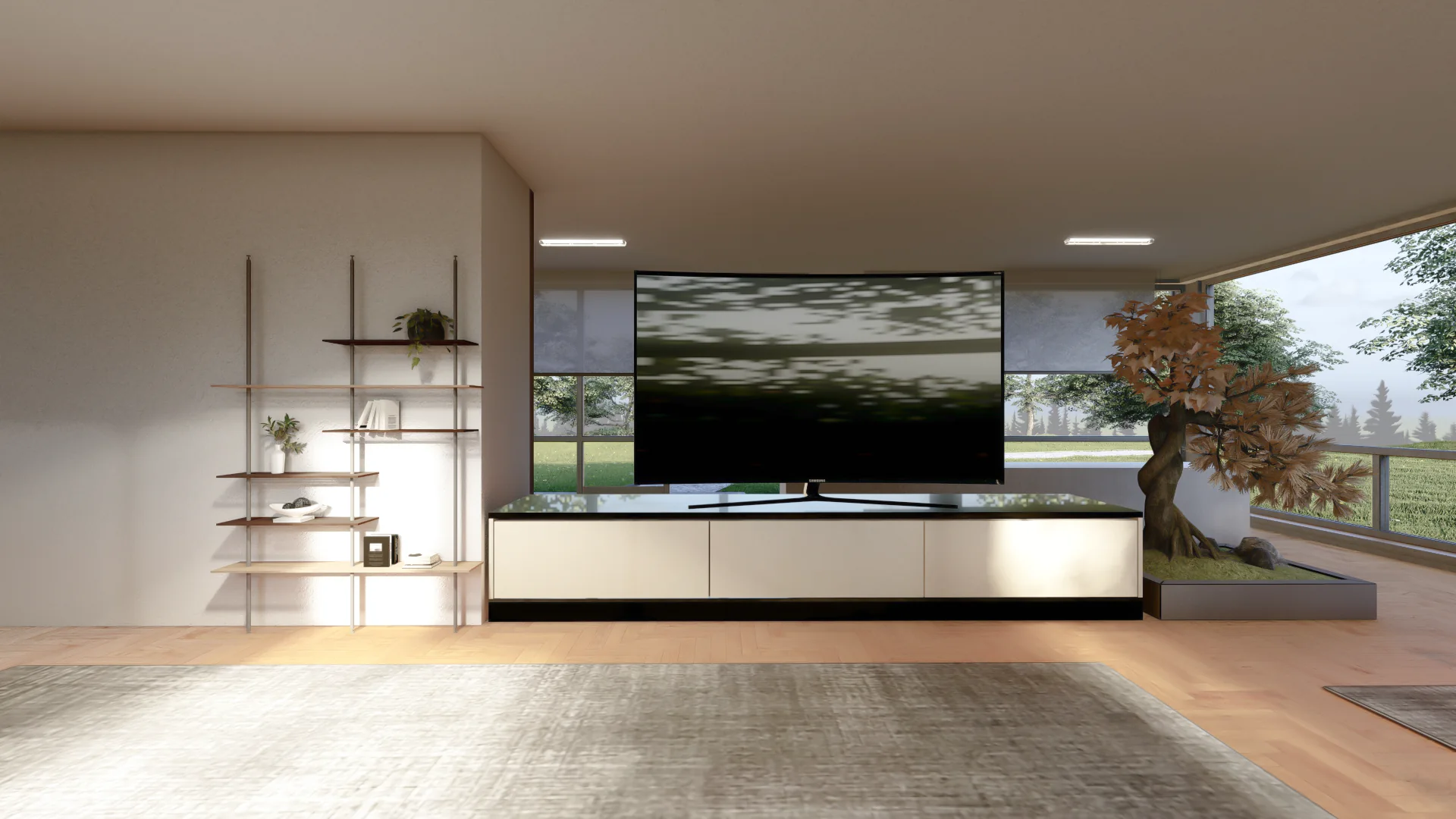
A well-designed media wall combines the television with closed cupboards for clutter, open shelves for books and objects, and hidden cable routes. Our Cabin House media wall pairs a low white cabinet with open shelving; in Earthy Abode, a marble panel and floating oak cabinet sit beside a recessed bookcase.
Built-in window seats with drawers beneath, sideboards in dining areas and ottomans with storage inside all add capacity without adding clutter.
Entrance storage
The entrance is where clutter starts: shoes, bags, keys, umbrellas, car keys, deliveries. A tall cupboard or a bench with shoe storage beneath and hooks above keeps it under control. A small tray or drawer for keys and a socket for charging phones by the door are surprisingly useful. During the rainy season, a place for wet umbrellas and shoes protects your floors.
Bathroom storage
Bathrooms need storage for toiletries, towels, cleaning products and spares. Vanity units with drawers, mirrored cabinets, recessed shower niches and a tall cupboard for towels all help. Use moisture-resistant materials and keep units off the floor where possible. See bathroom design that lasts.
Hidden storage everywhere
Some of the most useful storage hides in unexpected places:
- Under the stairs, with drawers or a cupboard.
- Above doors and wardrobes, for things you rarely need.
- Inside beds with drawers or lift-up bases.
- In window seats and benches.
- In a utility cupboard for the vacuum, mop, ironing board and cleaning supplies.
- In a lockable cupboard for documents and valuables.
Storage and dust
During harmattan, open shelves and the tops of cupboards collect dust quickly. Closed storage is easier to keep clean. Take wardrobes and cupboards right up to the ceiling so there’s no dusty gap on top, and choose door finishes that wipe clean easily. Keep open shelving for things you love to see, and close away everything else.
Made-to-measure is often worth it
Off-the-shelf storage comes in standard sizes that rarely fit real walls exactly. Made-to-measure joinery fits the space perfectly, uses awkward corners, and can be designed around your belongings. Nigeria has skilled carpenters and joiners; with clear drawings and good materials, locally made storage can be excellent. We explain more in why made-to-measure furniture is worth it.
Plan storage in the drawings
Built-in storage should be part of the design from the start, shown on the drawings with exact sizes, internal layouts, materials and lighting. That way the electrician can put lights and sockets inside wardrobes, the builder can leave walls straight and level where joinery will go, and the carpenter has everything they need. In 3D, you can see how the storage looks and how it opens before it’s built.
Children’s storage that grows with them
Children’s rooms change fast: toys become books, books become school bags and gadgets. Design storage that adapts: low open boxes young children can reach themselves, adjustable shelves, a wardrobe with rails that can be raised as they grow, and a desk area that can be added later. Durable, wipeable finishes and rounded edges are worth the extra thought. Labelled boxes help children tidy up on their own.
Storage for traditional clothing and special items
Many Nigerian wardrobes include special clothing: aso ebi, agbada, embroidered kaftans, aso oke, gele and other headwraps, and outfits for weddings and celebrations. These often need longer hanging space, garment bags, wide shallow drawers for folded fabrics and headwraps, and protection from dust and humidity. Planning dedicated space keeps them in good condition and easy to find when the next celebration comes round.
Jewellery, watches and important documents deserve a secure, lockable drawer or a small safe built into the wardrobe.
Lighting your storage
Storage you can’t see into is storage you don’t use well. LED strips inside wardrobes, switched by the doors opening, make it easy to find clothes early in the morning. Lights under kitchen wall cabinets, inside display shelves and in walk-in pantries add both function and atmosphere. Plan the wiring before the joinery is built; adding it later is awkward.
Review storage once a year
Needs change. Once a year, perhaps before the festive season, go through each cupboard, clear out what you no longer use, and adjust shelves and rails to suit what you own now. Well-designed storage makes this quick, and it keeps the whole home feeling calm and organised.
Common storage mistakes
- Not enough storage, planned too late.
- Wardrobes that stop short of the ceiling.
- Generic interiors that don’t suit what you own.
- No ventilation in wardrobes on outside walls.
- Cheap boards that swell in humidity.
- Too much open shelving, which becomes clutter.
- No home for cleaning equipment, suitcases or bulk food.
The short version
List what you own, plan storage around it, build in from floor to ceiling, ventilate wardrobes, use moisture-resistant materials, hide clutter behind doors and keep open shelves for things you love. Good storage is invisible; you just notice how calm the home feels.
Need more storage, or better storage? Tell us about your home. We’ll design it around your life and show it to you in 3D.