Bedroom design for better sleep: light, heat, noise and calm
A good bedroom is quiet, dark, cool and uncluttered. How to design one in a hot, bright, busy city: layout, air conditioning, blackout, lighting, storage and finishes that help you rest.
We spend roughly a third of our lives in the bedroom, yet it’s often the last room people think carefully about. The living room gets the attention, the kitchen gets the budget, and the bedroom gets whatever is left. But a well-designed bedroom has a direct effect on how well you sleep, how you start your day and how you feel at the end of it.
In a hot, bright, busy city like Lagos, designing for rest takes a little extra thought. This guide covers what we focus on when designing bedrooms for clients: layout, temperature, light, noise, storage, materials and the details that make a room feel calm.
Start with the bed
The bed is the centre of the room, so position it first. Ideally it should sit against a solid wall, with a clear view of the door but not directly in line with it, and away from the window so morning light and street noise aren’t right beside your head. Leave enough space on both sides for bedside tables and for getting in and out easily, and enough space at the foot to walk past and open wardrobe doors.
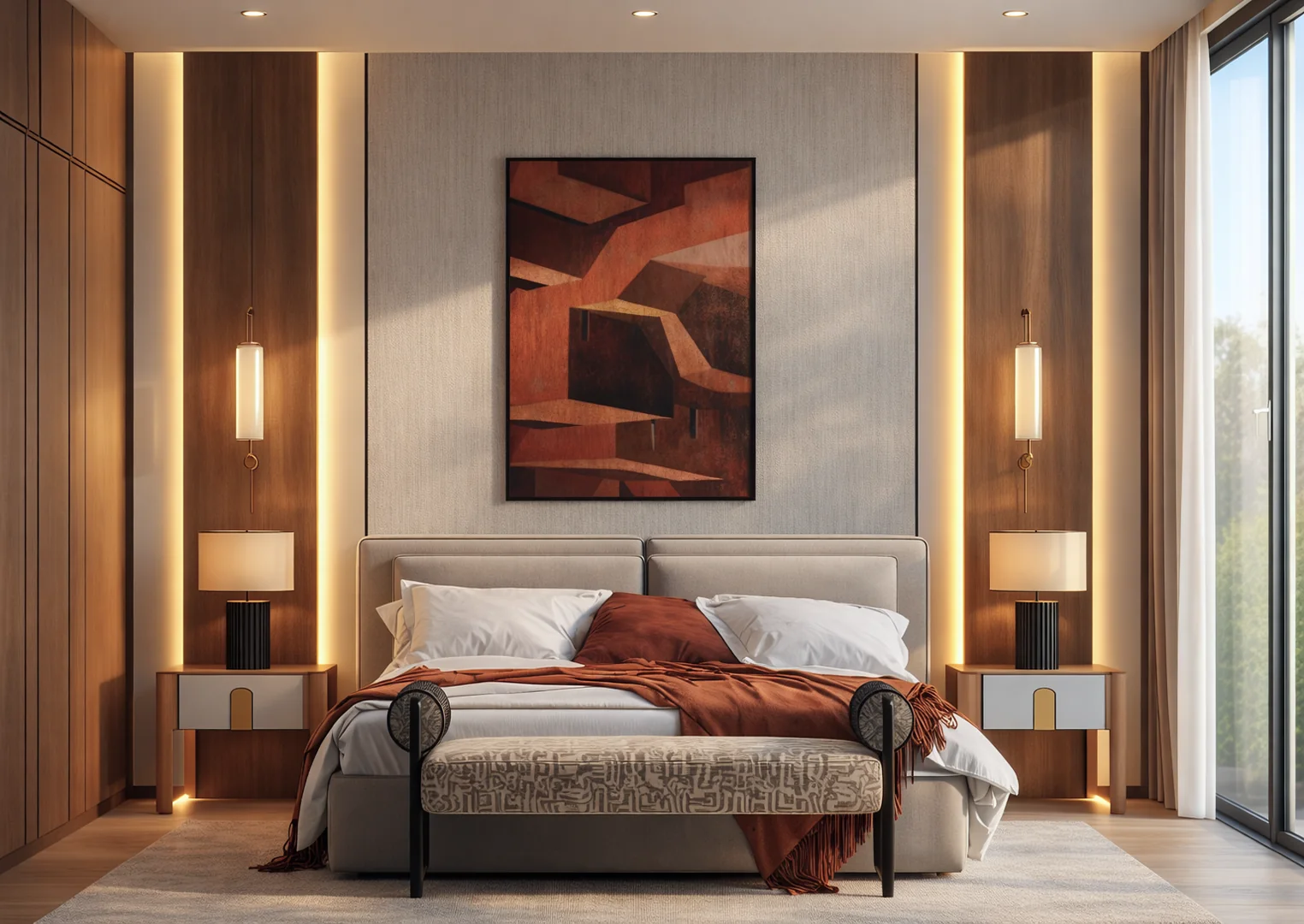
Think about the headboard wall as the room’s feature. An upholstered headboard, timber panelling, a textured plaster wall or a piece of art gives the room character and makes the bed feel anchored. In our Pent Home bedroom, the bed sits between walnut panels with warm wall lights and a single painting above.
Keep it cool, quietly
Temperature has a huge effect on sleep. Most people sleep best in a cool room. Air conditioning is the obvious answer, but where it goes matters. Position the unit so cold air circulates around the room rather than blowing directly onto the bed. A unit above the bed, blowing outwards, or on a side wall angled away, is usually more comfortable than one opposite the bed blowing straight at you.
Choose quiet units, and put the outdoor part away from bedroom windows if you can. A ceiling fan is a good partner to air conditioning: it keeps air moving at lower power, which matters when you’re running on an inverter during the night.
Breathable bedding, like cotton or linen, helps too. So do mattresses designed to sleep cool.
Control the light
Light is one of the strongest signals our bodies use to wake up. In Nigeria, the sun rises early and strongly, and security lights or streetlights can shine into bedrooms all night. Good bedrooms give you full control:
- Blackout curtains or blinds that block light properly, with enough overlap at the sides and top.
- A sheer layer for daytime privacy and softened light.
- Curtain tracks fitted close to the ceiling and extending past the window, so curtains stack clear of the glass and the room feels taller.
Light the room for evenings
Bedrooms need soft, warm light in the evening rather than a bright ceiling light. Plan:
- Bedside lights or wall lights on both sides, each with its own switch reachable from bed.
- Warm white LEDs, around 2700K, which feel restful.
- Dimmers where possible.
- Two-way switching, so you can turn the main light off from the door and the bed.
- A low night light for getting up without switching everything on.
Decide which bedroom lights and sockets run on the inverter. At minimum, a bedside light, the fan and a socket for charging phones. Read more in lighting your home and planning for power cuts.
Reduce noise
Generators, traffic, neighbours, televisions in other rooms: noise is a common sleep disturber. Some ways to reduce it:
- Well-sealed windows, ideally with good-quality glazing.
- Solid-core doors with seals, rather than hollow doors.
- Heavy curtains, rugs and upholstered headboards, which absorb sound.
- Wardrobes placed on walls shared with noisy rooms, acting as a buffer.
- Planning the house so bedrooms are away from the generator, the kitchen and the living room where possible.
Storage that keeps the room calm
Clutter makes it harder to relax. A bedroom needs enough storage for clothes, shoes, bags, bedding and the general overflow of life. Built-in wardrobes from floor to ceiling make the most of the space and look calm. A walk-in wardrobe or dressing area, if space allows, keeps the bedroom itself serene. Drawers under the bed or in a bench at its foot add hidden storage.
In our climate, wardrobes need ventilation to stay fresh and dry. More detail in built-in wardrobes and storage.
Materials that feel good
Bedrooms are the most tactile rooms in the house. Soft rugs underfoot, upholstered headboards, natural fabrics, warm timber and matt finishes all make a room feel calm. Avoid too many hard, shiny surfaces, which feel cold and reflect sound.
Our Cozy Bedroom project uses textured plaster, pale oak and rounded upholstered pieces so that almost every surface has a gentle texture. Our Classical Bedroom keeps ornate plasterwork white and lets low, soft furniture in taupe and dark wood bring the calm.
Colour for rest
Soft, muted colours are usually the most restful: warm whites, greiges, soft clay tones, muted greens and blues. Darker colours can work beautifully in bedrooms too, making them feel cocooning, as long as there’s enough light to balance them. Keep strong, bright colours for accents rather than walls.
Bedside essentials
Bedside tables should be roughly level with the top of the mattress, with room for a lamp, a glass of water, a book and a phone. Plan sockets with USB charging right there. A small drawer hides the bits and pieces that otherwise clutter the surface.
Children’s and guest bedrooms
Children’s rooms need to grow. Choose a layout and storage that can change from toddler to teenager, durable washable finishes, and lighting for both play and homework. Guest rooms need to feel welcoming but practical: a comfortable bed, space to unpack, somewhere to hang clothes, a mirror, good blackout and easy access to a bathroom. If relatives stay for long periods, plan them like a proper bedroom rather than a box room.
The main bedroom as a retreat
If you have the space, the main bedroom can become a small suite: a sleeping area, a dressing area and an en-suite bathroom, perhaps with a reading chair by the window. Separating these zones, even with a change in floor finish or a half-height wall, makes the room feel calm and considered.
Choosing the bed and mattress
The bed frame and mattress are worth more of your budget than almost anything else in the bedroom. A good mattress supports your back, stays comfortable through the night and suits the way you sleep: on your side, back or front. Try before you buy where you can. In a hot climate, mattresses with breathable covers and good airflow are more comfortable than dense foams that trap heat.
Size matters too. A king-size bed in a small room leaves no space to move; a small bed in a large room looks lost. Measure, and check the bed’s size in the layout before ordering. Upholstered beds need removable or easy-clean covers; timber beds should be properly seasoned so they don’t creak or warp.
Dressing and getting ready
Think about the morning routine. Where will you get dressed? Is there a full-length mirror with good light? A dressing table or vanity, like the floating oak drawer in our Cozy Bedroom, gives a dedicated place for getting ready, with a socket for a hairdryer and good lighting on the face. If two people get ready at the same time, plan enough space so you’re not queuing.
A chair or bench in the bedroom is useful for putting on shoes and laying out the next day’s clothes. A bench at the foot of the bed, like the channelled benches in our Classical and Cozy Bedroom projects, does both jobs neatly.
Technology, gently
Many of us bring phones, tablets and laptops to bed. Plan charging points at the bedside so cables don’t trail across the floor, and keep televisions modest in size or out of the bedroom altogether if you find they keep you awake. Smart controls for air conditioning and lights can be convenient, but simple, reliable switches matter more, especially when the power goes off and comes back.
A small reading corner
If there’s room, a comfortable chair by the window with a good reading lamp turns the bedroom into a place to unwind before sleep, away from the television and the busy parts of the house. It doesn’t need much space, and it’s often the corner people end up loving most.
Common bedroom mistakes
- Air conditioning blowing directly onto the bed.
- Curtains that let light in at the edges.
- Only one bright ceiling light.
- No switch reachable from the bed.
- Not enough storage, so clothes live on chairs.
- Bedrooms placed next to the generator or kitchen.
The short version
A good bedroom is cool, dark, quiet and uncluttered. Position the bed thoughtfully, place the air conditioning so it doesn’t blow at you, control the light, use soft lighting in the evening, reduce noise, plan enough storage and choose materials that feel good.
If you’d like help designing a bedroom you’ll love waking up in, tell us about it. We’ll show you the room in 3D before anything is bought or built.