Living room design for family and guests: layout, seating and comfort
How to design a living room that feels relaxed for the family on a quiet evening and still works when twelve relatives arrive on a Sunday. Layout, seating, lighting, storage and finishes.
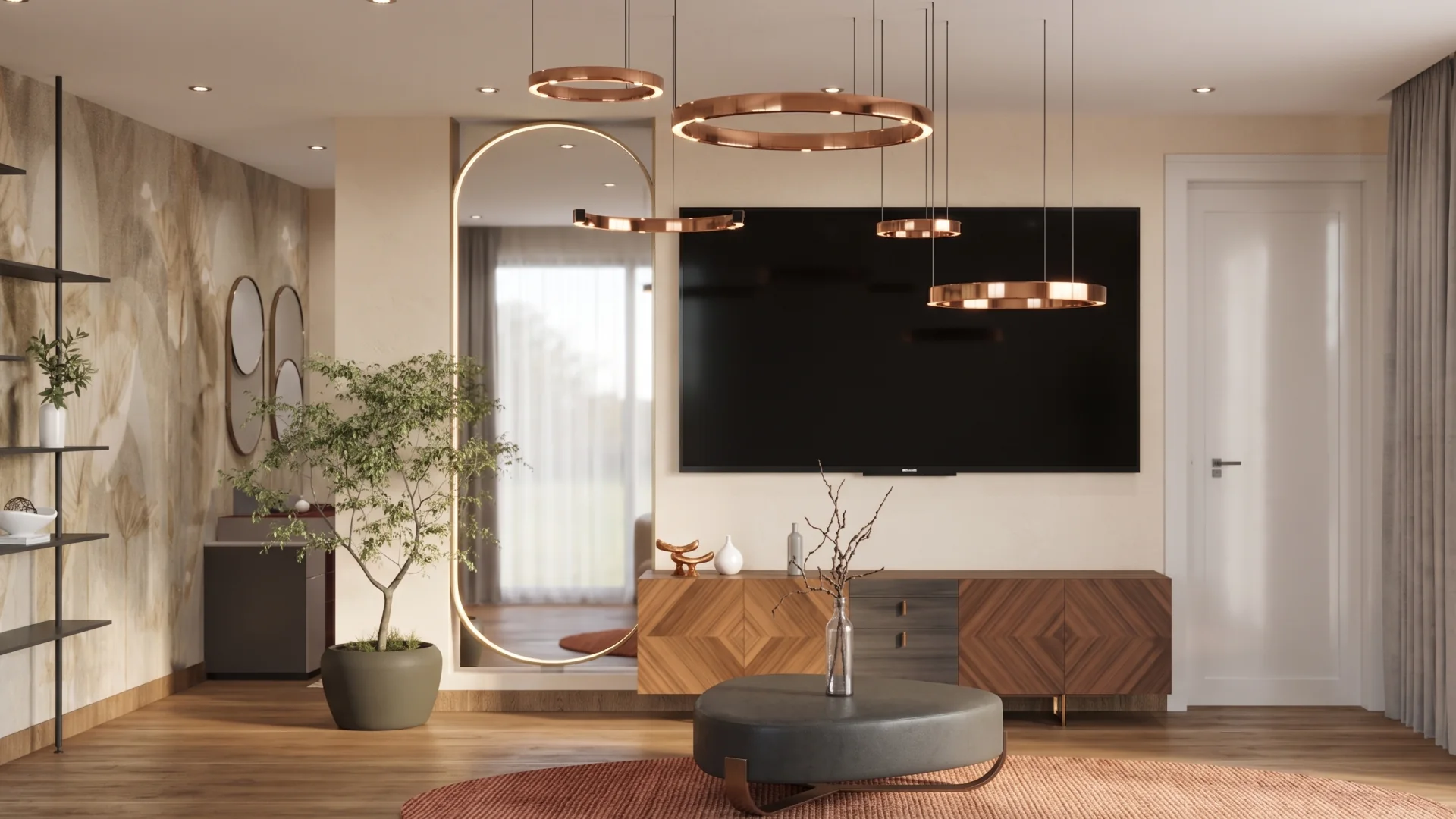
In many Nigerian homes, the living room has two lives. On a quiet weekday evening, it’s where the family watches television, catches up and unwinds. On a Sunday afternoon, or during a celebration, it might need to welcome a dozen relatives, neighbours and friends. Designing a room that feels right in both situations is one of the most interesting challenges in interior design.
This guide covers how we approach living rooms for clients in Lagos and across Nigeria: layout, seating, the television question, lighting, storage, materials and the finishing touches that make a room feel like yours.
Begin with how the room is used
Before thinking about furniture, think about life. How many people use the room on a normal day? How often do you host, and how many guests? Do children play here? Is there a separate formal sitting room, or does this room have to do everything? Do you watch a lot of television, or would you rather the room centred on conversation? Is it also a dining room, a reading corner or a workspace?
The answers decide the size and number of seats, where the focus of the room should be and how much flexibility you need.
Find the room’s focus
Every living room needs a natural focal point, the place your eye goes and your seating faces. It might be a view, a feature wall, a fireplace-style media wall, artwork or simply a conversation area. In many homes, the television becomes the focus by default, which can make the room feel like a cinema rather than a place to talk.
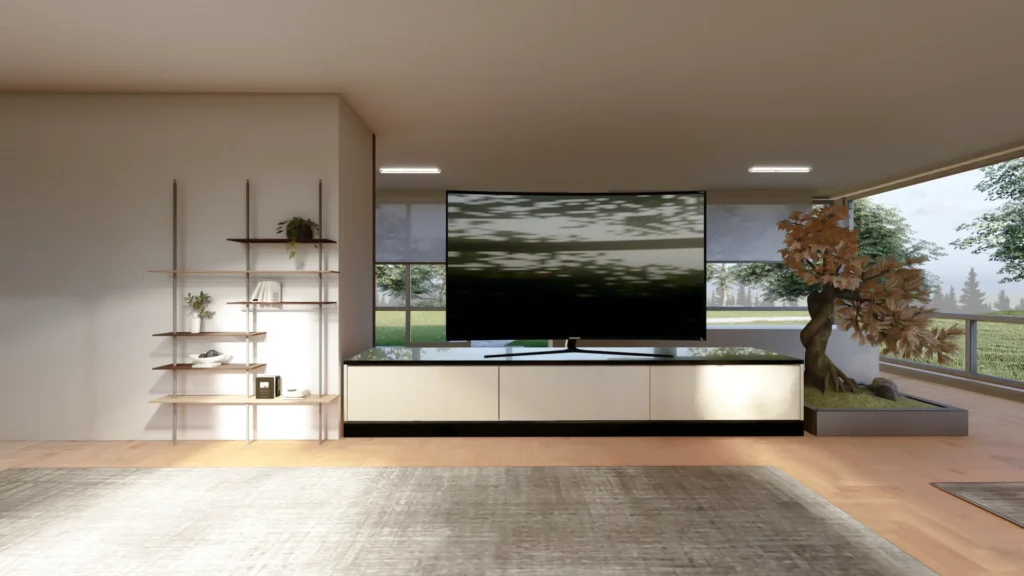
A good compromise is to design the media wall as a calm, beautiful feature in its own right, with storage, shelving or a stone or timber panel, so that the television is part of a composition rather than a black rectangle in the middle of a bare wall. Our Earthy Abode media wall uses a marble panel and floating cabinet for exactly this reason.
Plan seating for everyday and for guests
The main seating should be comfortable for the people who live there every day. Then plan how the room grows when guests arrive. Some ways to do this:
- A generous main sofa or modular sofa that can be reconfigured.
- Lounge chairs that can turn towards the conversation.
- Poufs, ottomans and benches that work as extra seats, footrests or side tables.
- Dining chairs that are comfortable enough to bring into the living area.
- A built-in window seat or bench that adds seating without adding clutter.
Arrange seats so people can talk without shouting. A good rule is to keep the main conversation group within about three to four metres across. In large rooms, create two or three seating groups rather than pushing all the furniture against the walls, which makes a room feel empty and people feel far apart.
Leave room to move
Walkways matter, especially when the room is full. Leave clear paths between doors and through seating areas, and enough space between the sofa and coffee table to pass comfortably while still reaching a cup. Rugs should be large enough for at least the front legs of the main seats to sit on them; a small rug floating in the middle makes the room look disconnected.
Scale is everything
One of the most common mistakes is furniture that’s the wrong size for the room: an enormous sectional that swallows a modest living room, or small, spindly pieces lost in a large one. Measure the room, mark furniture outlines on the floor with tape if you need to, and think about ceiling height too. Taller rooms can take larger lights, taller shelving and bigger artwork.
This is where 3D visualisation helps enormously. You can see the real size of each piece in your room before you buy it. We explain more in why we show you your home in 3D.
Light it in layers
Living rooms are used at every time of day, so lighting needs to be flexible:
- General light from the ceiling for cleaning and busy moments.
- Lamps at sitting height for evenings, which make a room feel warm and intimate.
- Accent light on artwork, shelves or a textured wall.
- Dimmers wherever possible, so one room can feel bright for a party and soft for a film.
Plan which lights run on the inverter so the room still works during a power cut. Our guide to lighting and backup power explains how.
Comfort in the heat
Living rooms are often the largest rooms in the house and catch a lot of sun. Think about where the air conditioning units sit, so cold air reaches the seating without blowing directly onto people. Add ceiling fans for milder days and to save power. Use sheer curtains or blinds to soften strong afternoon light and protect fabrics from fading, with heavier curtains for privacy and evening cosiness.
Choose upholstery that breathes and copes with heat. Some faux leathers become sticky and crack quickly in hot rooms; textured weaves, linen blends and performance fabrics are usually more comfortable.
Storage keeps it calm
Living rooms collect things: remotes, chargers, magazines, toys, games, photo albums, glasses for guests. Without storage, they end up on every surface. A media unit with closed cupboards, a sideboard, built-in shelving with doors below and open shelves above, or ottomans with storage inside keep the room tidy with little effort.
Plan cable management too. Televisions, sound systems, routers and lamps produce a tangle of wires. Run cables inside walls or furniture, and put sockets exactly where the equipment will sit.
Materials that live well
Living rooms take a lot of wear, especially if children and guests use them. Durable floors like porcelain tiles or engineered wood, washable or removable sofa covers, rugs that hide marks, and coffee tables that don’t mind cups and feet all help. A mix of textures, like boucle, linen, timber, stone and metal, makes a room feel rich without needing lots of colour.
If harmattan dust is a concern, avoid very pale fabrics on the most-used pieces, and choose closed storage for display items where possible.
Colour and character
A calm base of warm neutrals lets furniture, art and people stand out, and it ages well. Add personality with a few stronger pieces: a rust-coloured lounge chair, a deep green wall, artwork that means something to you, a vintage piece passed down in the family. In our Pent Home project, a curved cream sofa and a single rust lounge chair sit in front of a walnut-clad media wall: two strong moves, everything else quiet.
For more on choosing colours, read how to choose a colour palette that lasts.
Formal and family rooms
If your home has both a formal sitting room and a family room, let them be different. The formal room can be more polished, with your best pieces and art, ready for visitors at any time. The family room can be relaxed, with a bigger sofa, the television, games and space to sprawl. Trying to make one room do both jobs perfectly is hard; having two lets each be itself.
Dining in or next to the living room
In many homes, the dining area shares space with the living room. Treat it as its own zone: a pendant light centred over the table, a rug or a change in flooring to define it, and enough space around the table for chairs to be pulled out and people to pass behind them. An extendable table is useful in homes that host: it stays a comfortable size for family meals and grows for celebrations.
Think about where food will be served from when you host buffet-style, which is common at family gatherings. A sideboard or a long console near the dining area gives you a serving surface and storage for plates and glasses.
Art, plants and personal things
The things that make a living room feel like home are often the last to arrive: art, family photographs, books, plants, objects collected on travels. Leave room for them in the design. Plan picture lights or wall washers for important pieces, shelves deep enough for books and objects, and spots with good light for plants. A room that’s been designed with space for your own things never feels like a showroom.
Nigerian art, textiles and crafts can be beautiful in a contemporary living room: a large painting above the sofa, a hand-woven textile on a wall, a carved stool used as a side table. Choose a few pieces that matter to you rather than many that don’t.
Common living room mistakes
- All the furniture pushed against the walls.
- A sofa too large or too small for the room.
- A rug that’s too small.
- Only one ceiling light.
- No plan for the television and its cables.
- Air conditioning blowing straight onto the main seats.
- Pale fabrics on the most-used pieces.
The short version
Design the living room for everyday life first, then plan how it expands for guests. Give it a focus, arrange seating for conversation, keep walkways clear, get the scale right, light it in layers, keep it cool, hide the clutter and choose materials that can take real life.
If you’d like a living room that works for your family and your guests, tell us about it. You’ll see it in 3D before anything is bought.