Bathroom design that lasts: waterproofing, ventilation and finishes that stay beautiful
Bathrooms take more punishment than any other room. How to plan one that stays watertight, fresh and beautiful for years, from waterproofing and water pressure to tiles, fittings and light.
Bathrooms face the toughest conditions in any home: water, steam, heat, cleaning chemicals and use several times a day. In a humid climate like ours, a bathroom that isn’t planned properly will show it quickly: grout that turns black, tiles that crack or lift, cabinets that swell, mirrors that cloud and a musty smell that never quite goes away.
The good news is that a well-designed bathroom can stay beautiful for many years. Most of what makes the difference is invisible once the room is finished, which is exactly why it needs to be planned at the start. This guide explains how.
Start with the layout
Good bathrooms feel calm because everything is where you expect it. Think about the sequence of using the room: you walk in, wash your hands, use the toilet, shower or bathe, dry off, get dressed. The layout should make each step easy, with enough space in front of the toilet and basin and a clear path to the shower.
A few principles help:
- Avoid placing the toilet as the first thing you see when the door opens, if you can.
- Give the basin enough worktop or shelf space for daily things.
- Put towel rails within reach of the shower, not across the room.
- Plan storage for toiletries, spare towels and cleaning products, so nothing lives on the floor.
- If two people use the room at once, consider double basins or a separate toilet.
Waterproofing: the most important thing you’ll never see
Tiles and grout are not waterproof on their own. Water gets through grout lines over time, and if there’s nothing behind them to stop it, it soaks into walls and floors, causing damp, mould, lifted tiles and leaks into rooms below.
A proper bathroom has a waterproofing membrane applied to the floor and to the shower walls before tiling, turned up at the edges and sealed around pipes and drains. In a walk-in shower or wet room, the whole floor should be waterproofed. It costs relatively little and saves a great deal. Ask your builder exactly what waterproofing they’ll use and where, and photograph it before tiles go on.
Falls and drainage
Water should always run towards a drain, never towards the door. Shower floors need a gentle, consistent slope to the drain, and the bathroom floor itself should be set slightly lower than the rooms outside it, or have a threshold, so a blocked drain doesn’t flood the bedroom.
Linear drains, the long slim channels, are easier to tile around and look neat in walk-in showers. Whatever you choose, make sure drains can be reached and cleaned.
Ventilation: fresh air or mould
Steam needs somewhere to go. A window that opens helps, but an extractor fan that runs during and after showers is far more reliable, especially in bathrooms without windows or during the rainy season when windows stay shut. Choose a quiet fan sized for the room, vented to the outside, and wire it so it runs on for a few minutes after the light is switched off. Consider putting it on the inverter circuit so it works during power cuts.
Without ventilation, even the best finishes will develop mould around grout, sealant and ceilings.
Water pressure, pumps and heaters
Many homes in Nigeria rely on overhead tanks, boreholes and pumps rather than mains pressure. That affects which showers will work well. Large rain showers and some mixer valves need good pressure to perform; with low pressure, they disappoint. Plan the water supply with your plumber at the design stage: tank height, a pressure pump if needed, and pipe sizes.
Water heaters need careful thought too. Storage heaters provide hot water to several outlets but take up space and need access for maintenance. Instant heaters save space but draw a lot of power while running, so they’re usually not suitable for an inverter. Plan where each heater goes, how it will be reached for servicing, and which circuit it runs on.
Water treatment is also worth considering. Hard or iron-rich water can stain sanitaryware, clog shower heads and damage fittings. A filter at the inlet protects everything downstream.
Tiles and surfaces
Porcelain tiles are the workhorse of good bathrooms: dense, hard-wearing and very low in water absorption. Natural stone like marble or travertine looks beautiful but is porous and needs sealing and gentle cleaning products; acidic cleaners can etch it. Terrazzo is durable and characterful. Large-format tiles mean fewer grout lines, which look calmer and are easier to keep clean.
For floors, choose tiles with suitable slip resistance, especially in showers. Polished tiles are lovely on walls but slippery underfoot when wet.
Grout matters more than people think. Epoxy grout resists stains and mould much better than standard cement grout, and a mid-tone grout colour hides the small marks of everyday life better than bright white.
Fittings and sanitaryware
Taps, shower valves and fittings are the parts you touch every day and the parts that fail most often if they’re poorly made. Spend here. Look for solid brass bodies, quality finishes, and brands with spare parts available locally. Near the coast, salt air can corrode cheap finishes quickly.
Wall-hung toilets and basins make floors easier to clean and the room feel larger, but they need strong support frames built into the wall and an access panel for the concealed cistern. Plan these during the design; they can’t be added later without opening the wall.
Storage that survives humidity
Vanity units and cabinets should be made from moisture-resistant boards with sealed edges, and raised off the floor or wall-hung so they don’t sit in water. Mirrored cabinets give storage without taking floor space. Recessed niches in the shower wall keep bottles off the floor and off the window sill; plan them before tiling so they line up neatly with the tiles.
Light and mirrors
Good bathroom lighting has two jobs: bright, even light for washing and shaving, and softer light for a relaxing bath. Light from the sides of a mirror, or from a backlit mirror, is far more flattering and useful than a single spotlight overhead, which casts shadows on your face. Choose fittings rated for use in bathrooms, especially near the shower.
Demisting mirrors are a small luxury that makes a big difference in a steamy room.
Glass, screens and doors
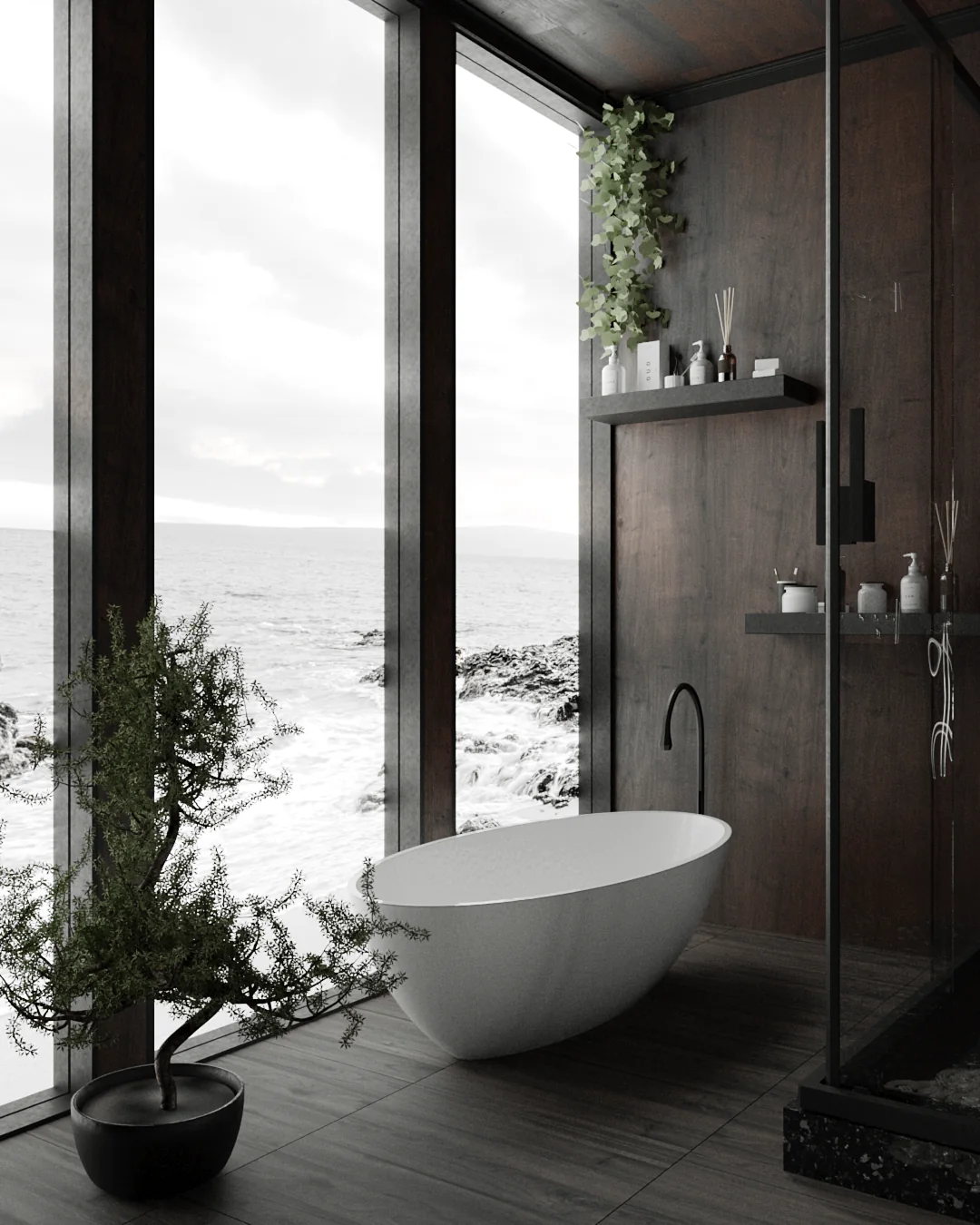
Walk-in showers with a fixed glass screen look clean and are easy to maintain. Use toughened safety glass of a good thickness, with fittings designed for wet areas. Black or bronze frames can look striking, as in our Coastal Noir bathroom, but they need quality finishes to resist corrosion. A quick squeegee after each shower keeps glass clear and stops limescale building up.
Designing for everyone
A bathroom built today should still work in twenty years. A walk-in shower with no step, a little extra space around the toilet, solid backing in the walls for grab rails later, and good lighting make a bathroom comfortable for older parents and visitors, without looking clinical.
Making it beautiful
With the technical foundations right, the design can be as calm or as dramatic as you like. A few ideas we often use:
- One special material used generously, like a stone wall behind the bath or a sculpted tile behind the basins.
- A limited palette of two or three finishes, so the room feels considered rather than busy.
- Warm timber or stone-effect vanities to soften all the hard surfaces.
- A plant or two, if the room has natural light.
- A view, where you have one. In Coastal Noir, the bath sits right up against the window and the sea.
You can see more bathrooms in our Modern Home and Pent Home projects.
Guest bathrooms and powder rooms
A small guest toilet, often called a powder room, is a chance to have some fun. Because it’s used briefly and doesn’t get steamy, it can take bolder wallpaper, a dramatic basin or a darker colour than a main bathroom would. It still needs good ventilation, a mirror, somewhere to put a bag or phone, and enough hand towels. Guests notice these small courtesies.
Cleaning and maintenance
Design with cleaning in mind. Wall-hung fittings, fewer grout lines, rounded internal corners and simple shapes are all easier to keep clean. Ask what cleaning products each finish needs; natural stone, for example, is damaged by many common bathroom cleaners. Keep spare tiles from the same batch in case one ever needs replacing, because colours vary between production runs.
Common bathroom mistakes
- No waterproofing membrane behind the tiles.
- Floors that slope the wrong way or not at all.
- No extractor fan, or one that vents into the ceiling space.
- Showers chosen without checking water pressure.
- Polished tiles on a shower floor.
- Concealed cisterns with no access panel.
- Chipboard vanity units that swell within a year.
The short version
Get the invisible things right first: waterproofing, drainage, ventilation, water pressure and power for heaters. Then choose durable tiles, quality fittings, moisture-resistant storage and good lighting. Do that, and the beautiful part will last.
Planning a new bathroom or renovating an old one? Tell us about it. We’ll design it, show it to you in 3D and give your builder the drawings to build it properly.